Kimchi Jjigae (Kimchi Stew) – One Pot!

This post may contain affiliate links. Please read our disclosure policy.
Kimchi Jjigae is a classic Korean stew that feels like comfort in a bowl, but did you know you can make it in under an hour with just one pot?! It’s spicy, tangy, and packed with tender pork belly and silky tofu. Plus, it’s the BEST way to use up that old jar of kimchi in your fridge!
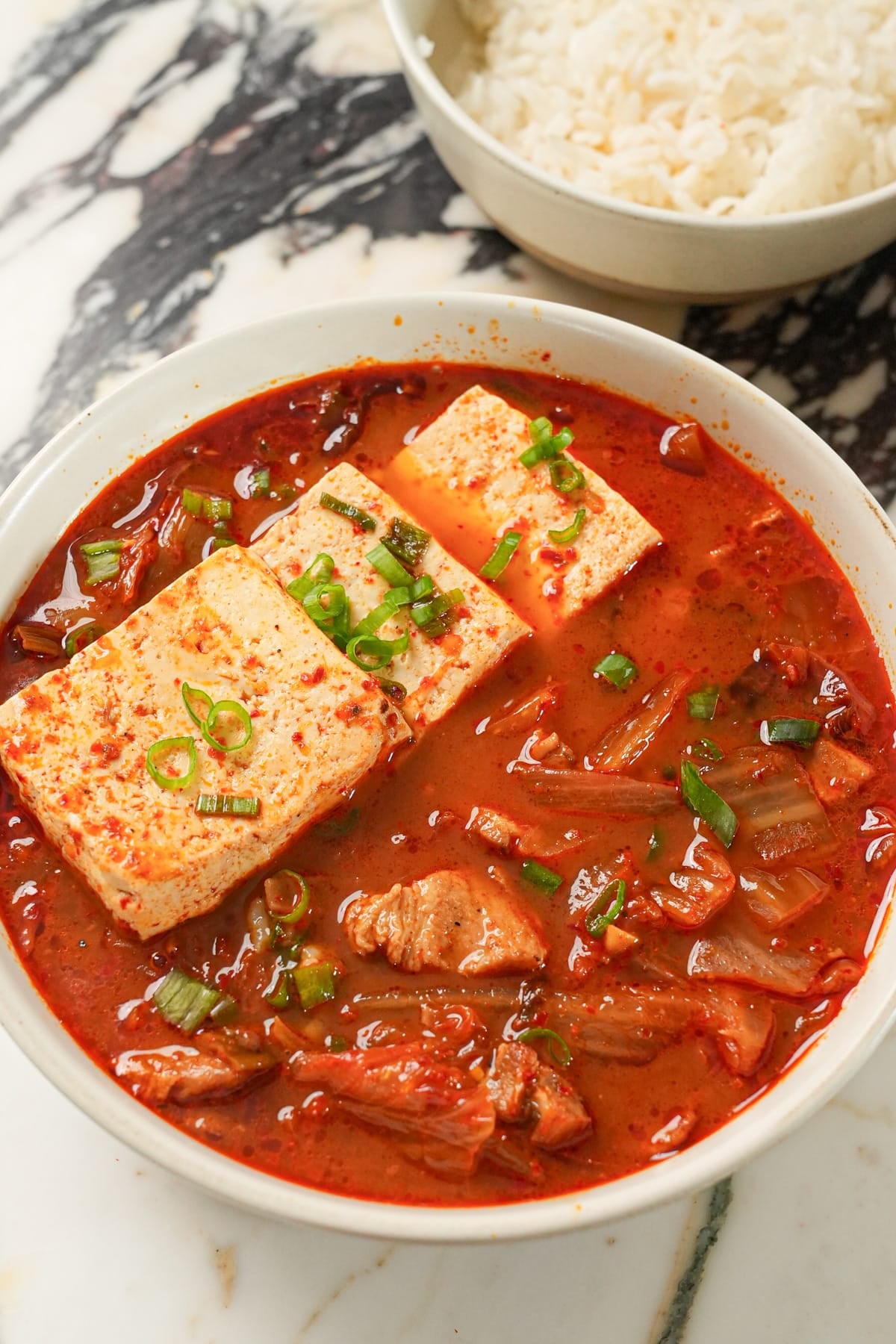
Watch the Kimchi Jjigae (Korean Kimchi Stew) Recipe Video!
A Note from CJ
This is going to be your go-to Kimchi Jjigae recipe!

I love my Kimchi Jjigae recipe because it’s so rich and flavorful, with the perfect balance of spice and tang from the kimchi, and it’s so easy to make! Kat helped me develop this recipe, based off her grandmother’s version!
It’s always Soup season in my house! If you love Korean food as much as I do, serve this with my Korean Marinated Short Ribs (LA Galbi) and Korean Corn Cheese for the ultimate Korean dinner at home!
What Kimchi Should I Use?
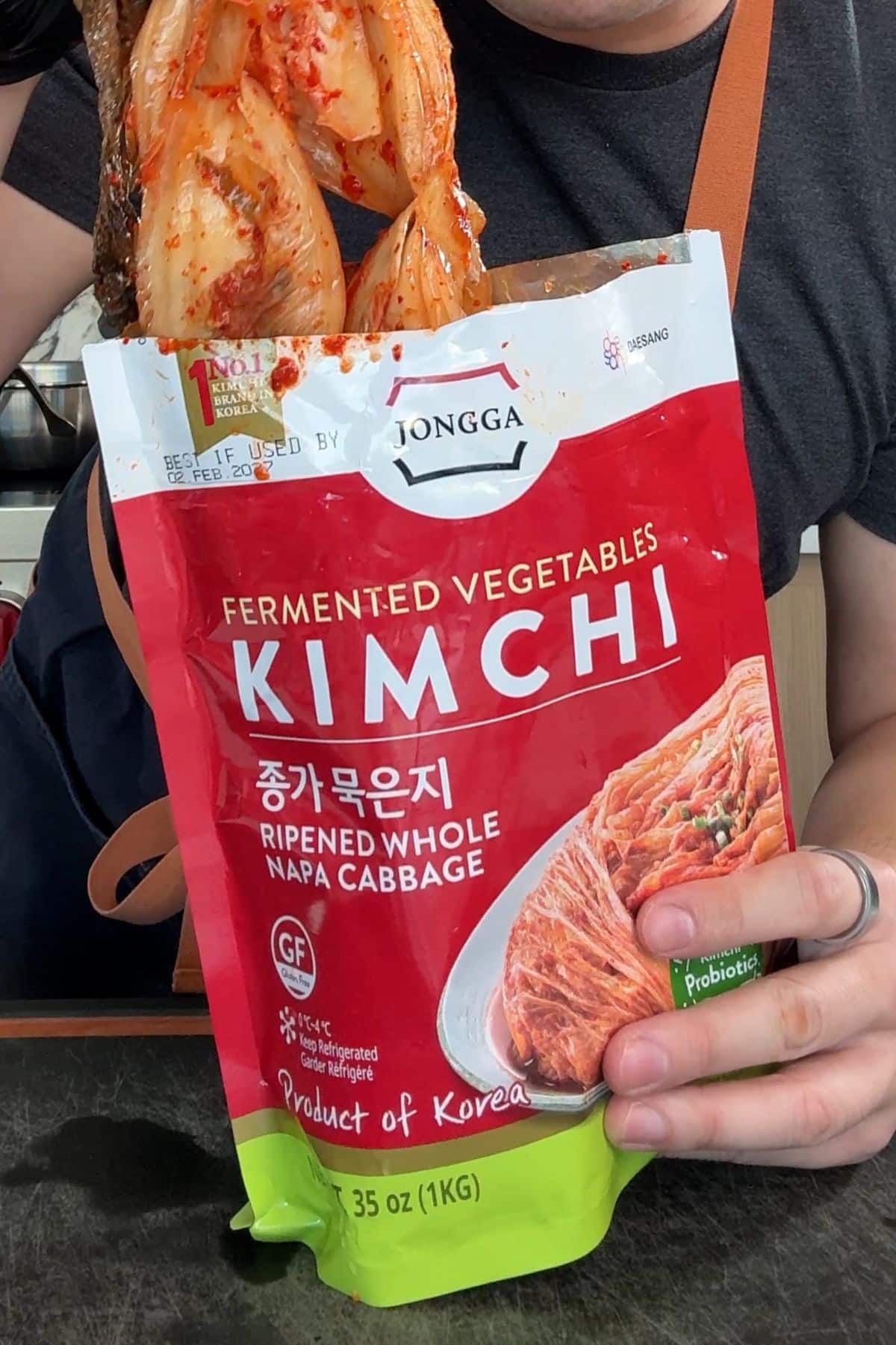
The secret to the best Kimchi Jjigae (Korean kimchi stew) is using aged, sour kimchi – I used store-bought kimchi that is aged before selling, called mukeunji (묵은지) (see image below)!
- aged kimchi – this is kimchi that has been fermenting in your fridge for a few weeks or more. It’s softer, more sour, and has a deeper flavor, which is exactly what you want for this stew! Korean markets sell packaged aged kimchi called mukeunji (묵은지). Look for the words “Ripened” or “Aged” on the package.
- regular kimchi – fresh or store-bought kimchi that hasn’t fermented as long will still work, but your stew won’t be as tangy or flavorful. See my tips below for how to fix it!
Ingredient Tips
Refer to the recipe card for the full list of ingredients and measurements!
- kimchi – use older kimchi that is well-fermented – it will be more flavorful than fresh kimchi. You can also buy mukeunji (묵은지), which is already aged kimchi.
- kimchi juice – don’t throw out the juice at the bottom of the jar, as it adds so much tangy flavor to the broth.
- pork belly – the fat renders out and becomes the base of the stew. If you prefer a leaner option, use pork shoulder instead.
- gochugaru – these are Korean chili flakes – I recommend using the coarse gochugaru, not the fine gochugaru.
- Korean fish sauce – this adds a deep savory flavor to the broth. You can also use regular fish sauce.
- tofu – use medium-firm tofu so it holds its shape but stays soft. Soft tofu will fall apart in the stew!
How to Make Kimchi Jjigae
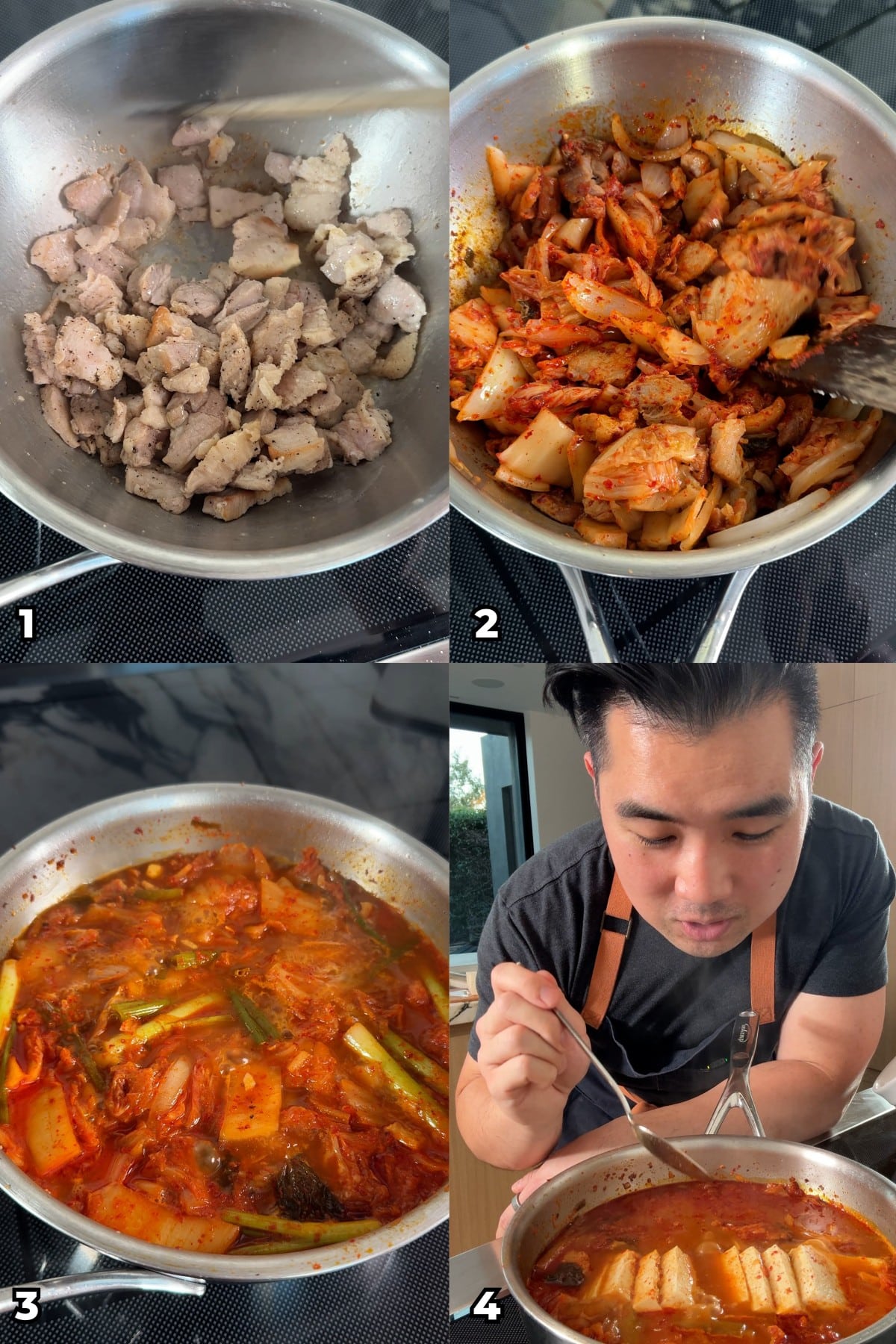
Render the Pork Belly and Sauté Aromatics – In a large pot, heat the neutral oil over medium-high heat. Add the pork belly, season with salt and pepper, and sauté until the fat renders and the pork is lightly browned, 5–6 minutes. Add the garlic and onion and sauté until fragrant, about 1 minute.
Sauté the Kimchi and Add the Broth – Add the kimchi, gochugaru, gochujang, and sesame oil and stir to coat everything evenly. Cook until the kimchi softens and turns a deep red, 4–5 minutes. Add the green onions, kimchi juice, water, fish sauce, and sugar, scrape up any browned bits from the bottom of the pot, and bring to a boil.
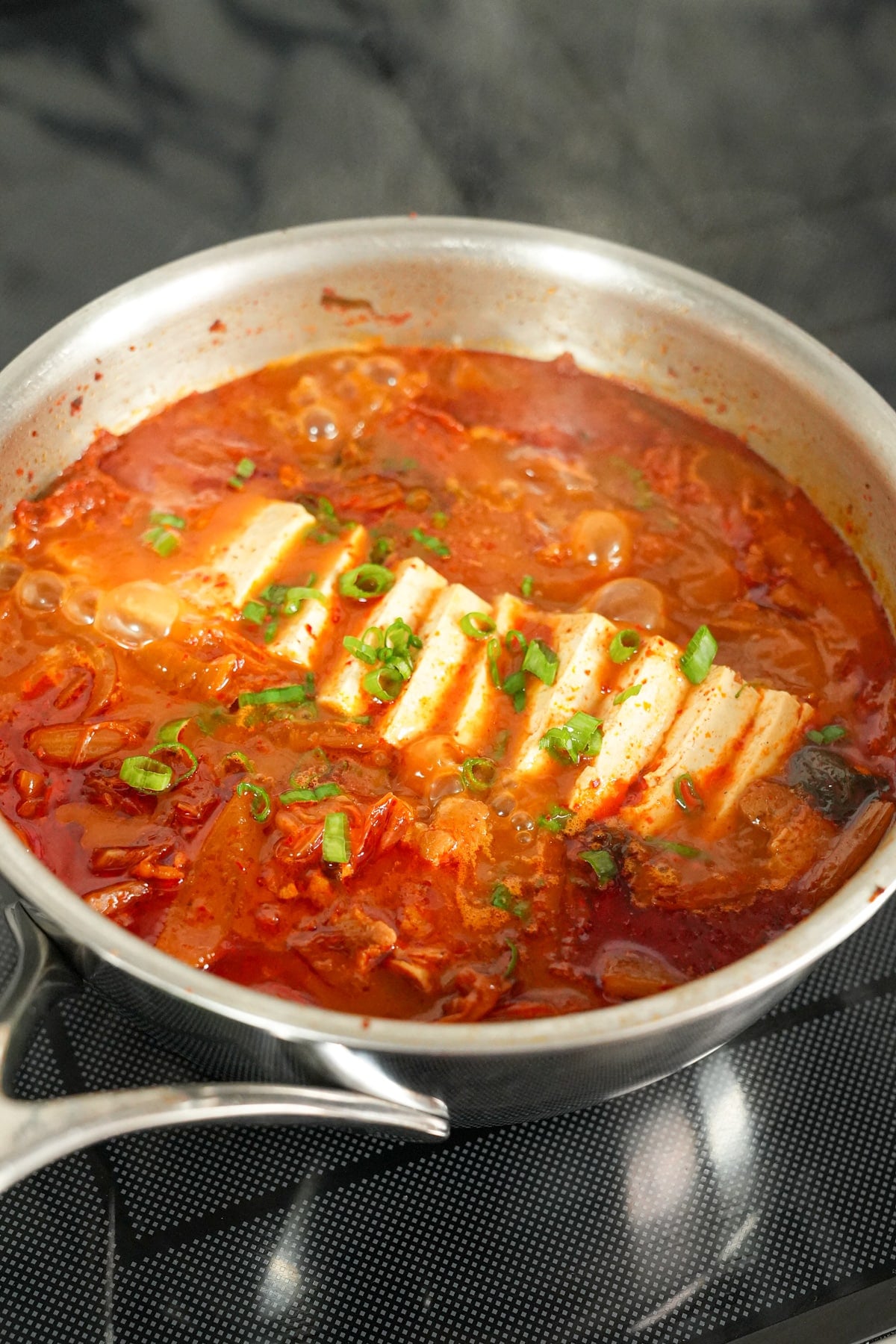
Simmer and Add Tofu – Reduce the heat to medium-low, cover, and simmer for 15–30 minutes until the pork is tender and the broth is rich and flavorful. Taste and adjust the seasoning. Gently lay the tofu slices on top, cover, and simmer for another 5 minutes. Serve hot with steamed rice!
PRO TIPS
CJ’s Recipe & Storage Tips
Use Old/Sour Kimchi – This is my key tip to the best Kimchi Jjigae – use either old kimchi that is well-fermented or buy mukeunji (묵은지), which is aged kimchi.
Kimchi isn’t Sour Enough? / Kimchi is TOO Sour? – If you are using fresher kimchi, you can add a splash of rice vinegar to the broth to add some tang. If your kimchi is too sour, add a little extra sugar to balance it out!
Upgrade Your Broth – I used water but for even more flavor, use anchovy stock instead! Many Asian grocery stores sell anchovy broth packets that you just steep in water. You can also use the water from rinsing your rice, which is a classic Korean trick that adds body to the stew.
Sauté the Kimchi First – Don’t skip sautéing the kimchi in the pork fat before adding the liquids! This caramelizes the kimchi and builds so much flavor into the stew. Make sure to keep stirring so the gochugaru doesn’t burn.
Don’t Stir the Tofu – Once you add the tofu, gently lay it on top and let it heat through. Stirring will break it apart!
Storage – Store any leftover Kimchi Jjigae in an airtight container in the refrigerator for up to 3–4 days. Reheat until warmed through on the stove or in the microwave. It tastes even better the next day! You can freeze it for up to 3 months, but the tofu’s texture will change. If you can, freeze it before adding the tofu and add fresh tofu when you reheat.
If you tried this Kimchi Jjigae or any other recipe on my website, please leave a 🌟 star rating and let me know how it went in the comments below!
Kimchi Jjigae (Korean Kimchi Stew)

Video
Ingredients
- 1 tbsp neutral oil
- 10 ounces pork belly, cut into bite-size pieces
- 1/2 tsp kosher salt
- ¼ tsp black pepper
- 4 cloves garlic, minced
- ½ small white onion, thinly sliced
- 1 lb well-fermented kimchi, roughly chopped
- 2 tbsp coarse gochugaru
- 1 tbsp gochujang
- 1 tsp toasted sesame oil
- 3 stalks green onions, ends removed, cut into 2-inch pieces
- ½ cup kimchi juice
- 4 cups water
- 2 tbsp Korean fish sauce
- 2 tsp sugar
- 1 package medium-firm tofu, about 14 to 16 ounces, sliced into bite-size pieces
- Steamed short-grain white rice, for serving
Instructions
- In a large pot, heat the neutral oil over medium-high heat. Add the pork belly and season with salt and pepper. Sauté, stirring occasionally, until the fat starts to render and the pork is lightly browned, 5–6 minutes.
- Add the garlic and onion and sauté in the rendered fat until fragrant, about 1 minute.
- Add the kimchi, gochugaru, gochujang, and sesame oil and stir to coat everything evenly. Cook, stirring frequently so the gochugaru doesn’t scorch, until the kimchi softens and the mixture turns a deep red, 4–5 minutes.
- Add the green onions, kimchi juice, water, fish sauce, and sugar and stir to combine, scraping up any browned bits from the bottom of the pot. Bring to a boil.
- Reduce the heat to medium-low, cover, and simmer for 15–30 minutes, until the pork is tender and the broth is rich and flavorful. Taste and adjust the seasoning, adding a splash more kimchi juice or fish sauce if needed.
- Gently lay the tofu slices on top of the stew, cover, and simmer for another 5 minutes, until the tofu is heated through. Serve hot with rice.
Notes
- aged kimchi (recommended) – this is kimchi that has been fermenting in your fridge for a few weeks or more. It’s softer, more sour, and has a deeper flavor, which is exactly what you want for this stew! Korean markets sell packaged aged kimchi called mukeunji (묵은지).
- regular kimchi – fresh or store-bought kimchi that hasn’t fermented as long will still work, but your stew won’t be as tangy or flavorful. See my tips below for how to fix it!
Nutrition
Nutrition information is automatically calculated, so should only be used as an approximation.