Soondubu Jjigae (Korean Soft Tofu Stew)

This post may contain affiliate links. Please read our disclosure policy.
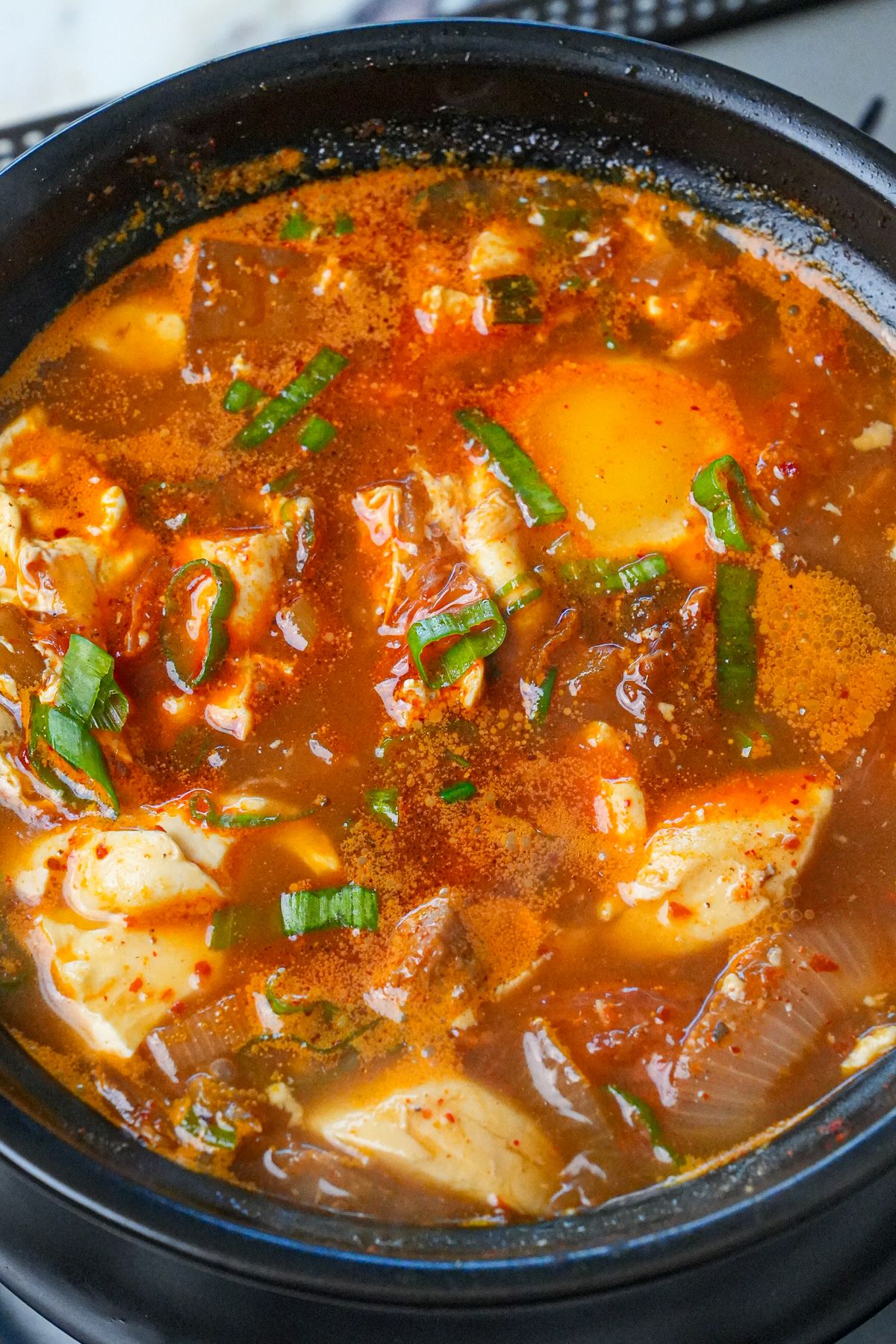
Soondubu Jjigae (also called sundubu jjigae, soon tofu, or Korean soft tofu stew) is silky soft tofu, pork belly, and kimchi in a spicy, rich broth, with eggs cracked right into the bubbling pot! It tastes just like your favorite Korean restaurant, but it’s made in one pot with store-bought broth – ready in 30 minutes and feeds the whole family!
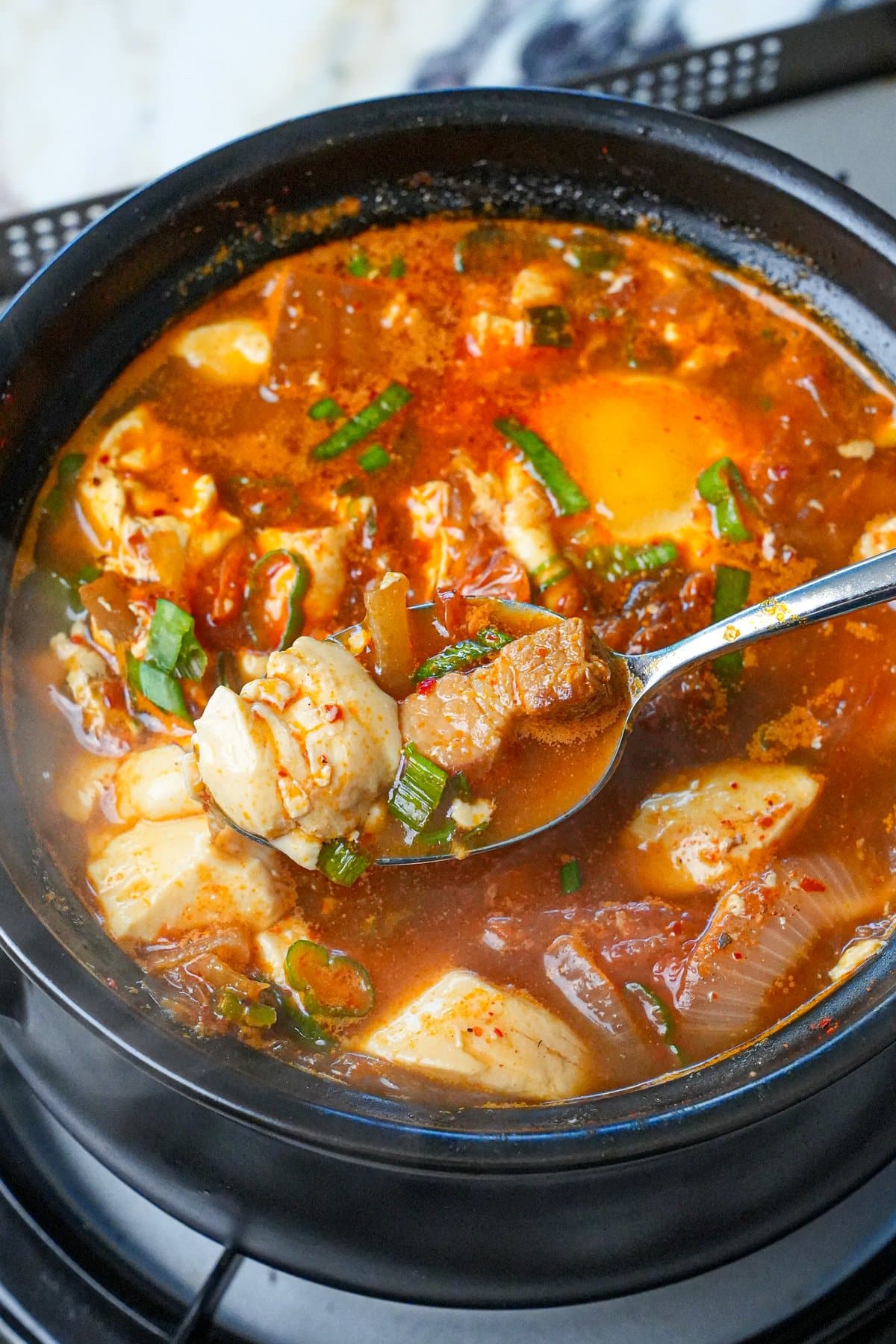
Watch the Soondubu Jjigae (Korean Soft Tofu Stew) Recipe Video!
A Note from CJ
This is going to be your go-to Soondubu Jjigae recipe!

In Los Angeles, there’s a popular chain called BCD Tofu House, and I would get soondubu (or soon tofu) there all the time – that’s what inspired this recipe! The secret is toasting the gochugaru with the kimchi in the rendered pork fat – it makes the broth so smoky and rich. I love serving this with Korean side dishes (banchan) like Korean Braised Potatoes, Spicy Korean Spinach, or Korean Corn Cheese!
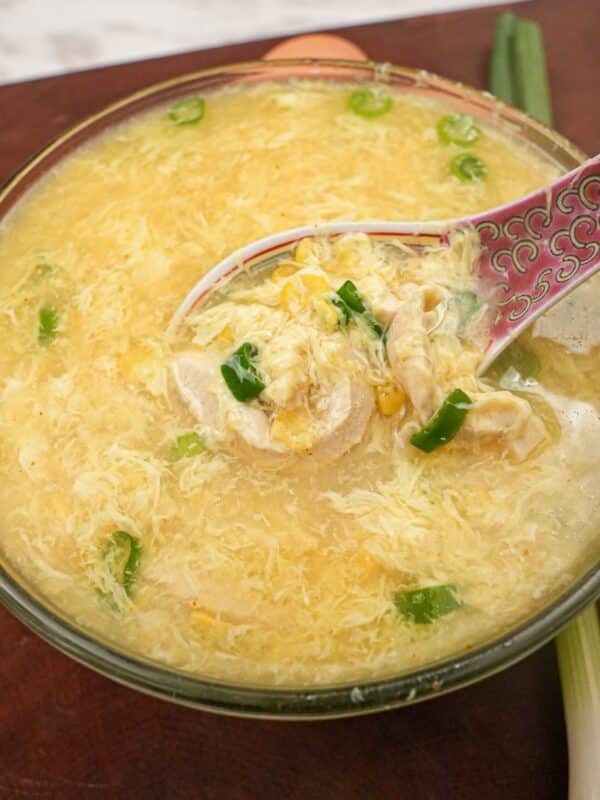
It’s always Soup season in my house – I love making classic Egg Drop Soup, Hot and Sour Soup, easy Miso Soup, comforting Congee, and Wonton Noodle Soup!
Ingredient Tips
Refer to the recipe card for the full list of ingredients and measurements!
- sundubu (soft tofu) – extra soft tofu is usually sold in tubes (some brands come in a box, which works too). I get mine at H Mart, but a lot of grocery stores carry it. You can also use silken tofu.
- kimchi – use well-fermented, sour kimchi! The older it is, the more tangy flavor it adds.
- gochugaru – Korean red chili pepper flakes that give the stew its smoky heat and red color. You can use gochujang instead, but it makes the broth sweeter and thicker – start with 1 tbsp and skip the sugar. PRO TIP: I toast the gochugaru with the kimchi right in the rendered pork belly fat. The fat pulls out all of the chili’s color and flavor, and the quick toast gives the broth that deep, smoky flavor you get at a Korean tofu house! Just keep stirring and pull it once it darkens slightly – if it burns, it’ll turn bitter.
- Korean soy sauce – also called soup soy sauce. It’s lighter and saltier than regular soy sauce – if you use all-purpose soy sauce, start with half or 2/3.
- beef bone broth – soondubu is traditionally made with anchovy and kelp stock, but I love beef bone broth because it gives you a rich base with zero extra work! You can use anchovy stock, or even chicken or vegetable broth.
Which Tofu Should You Use?
When you go to the Asian grocery store, the tofu section will have many different brands and firmness levels. Tofu all starts out the same way – the process starts by curdling soy milk, but the difference is how much water is pressed out to determine firmness. So which one should you buy?
- soft tofu (soondubu/sundubu) – this is the traditional choice! Almost no water is pressed out, creating silky, custard-like pieces that soak up that spicy broth. You can also buy tofu labeled “silken tofu”.
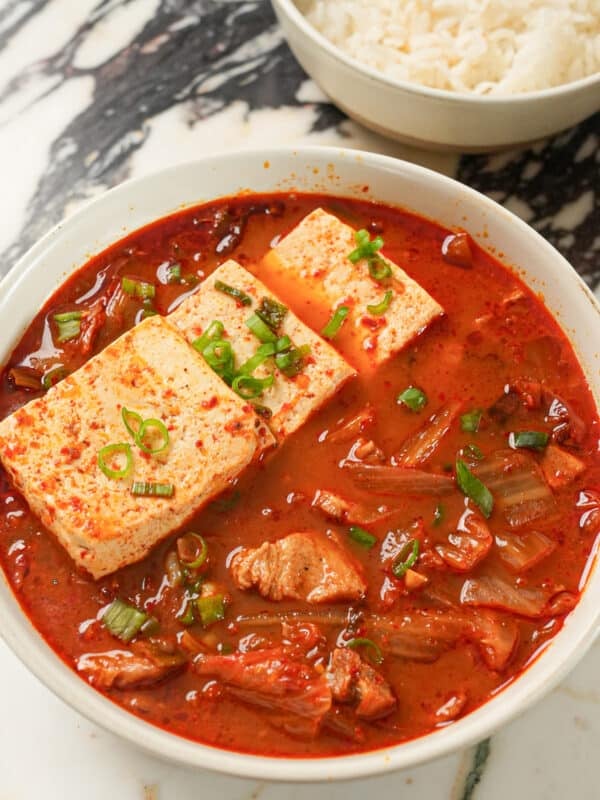
- medium firm tofu – this is still tender but holds the shape a bit better in the hot broth. I prefer this type for my Kimchi Jjigae, or Korean Kimchi Stew!
- firm/extra firm tofu – this will hold its shape in the stew, despite boiling and has a heartier, meaty bite. I use this in Chinese recipes like my Mapo Tofu or Crispy Salt and Pepper Tofu because I want the tofu to hold its shape.
How to Make Soondubu Jjigae (Korean Soft Tofu Stew)
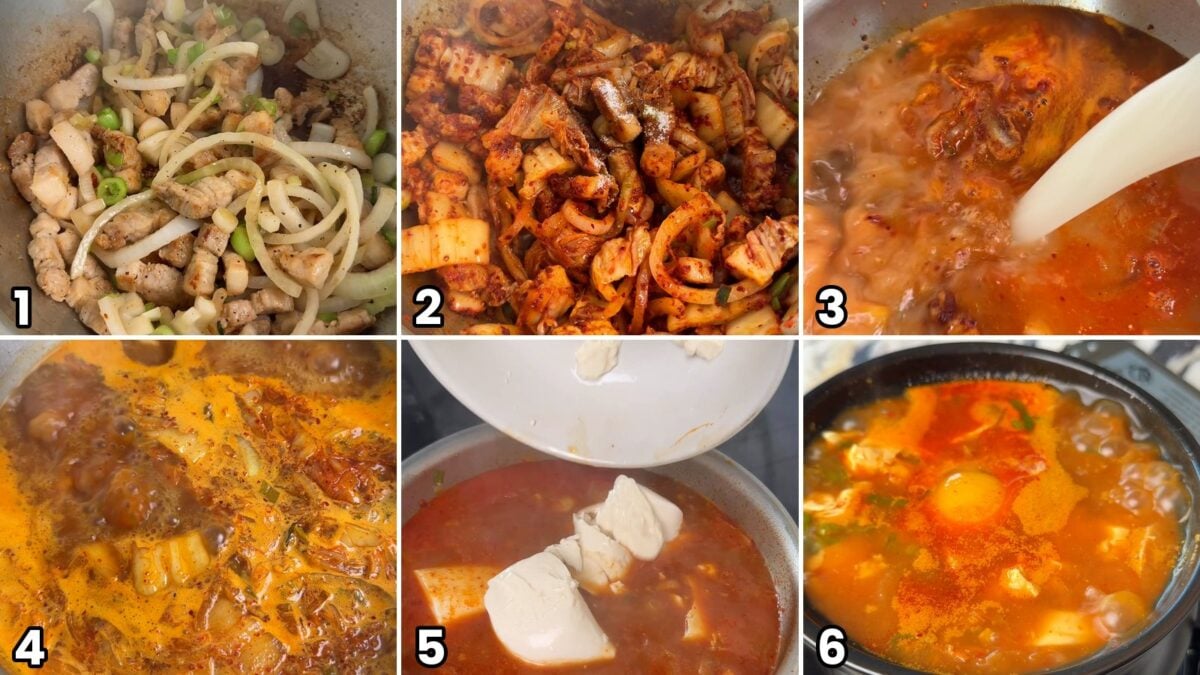
Render the Pork and Sauté the Aromatics – Heat the oil in a 3.5-4 quart pot or Korean earthenware pot (ttukbaegi) over medium heat. Add the pork belly, season with salt and pepper, and cook for 3-4 minutes until some of the fat has rendered. Add the onion, green onion whites, and garlic and sauté for 1-2 minutes.
Toast the Kimchi and Gochugaru – Add the kimchi and gochugaru and stir over medium high heat for 30 seconds to 1 minute, until the gochugaru darkens slightly and smells toasted. Stir in the soy sauce, fish sauce, and sugar, scraping up the browned bits.
Simmer the Broth and Add Tofu – Add the broth, bring to a boil, and simmer over medium heat for 10 minutes. Squeeze the tofu into the pot, break it into large chunks with a spoon, and simmer for 2-3 minutes. Taste and adjust the seasoning.
Add the Eggs and Serve! – Crack in the eggs, top with the green onion greens, and boil for 1 minute to lightly poach. Serve with steamed rice and enjoy!
PRO TIPS
CJ’s Recipe & Storage Tips
Spice Level – For a milder stew, use 1 tbsp of gochugaru or less. For a spicier one, add more or top with a sliced fresh chili!
Customize It – Swap the pork belly for clams and shrimp to make seafood soondubu (haemul sundubu), or use pork shoulder for a lighter version. If using shrimp or clams, do not saute them with the aromatics in step 2. Simply add the seafood with the beef bone broth in step 5 and let them simmer until cooked through.
For vegetarian, skip the pork, use veggie broth, and swap the fish sauce for extra soy sauce. Enoki mushrooms, shiitake, zucchini, and spinach are all delicious add-ins!
Storage – Store any leftover Soondubu Jjigae in an airtight container in the refrigerator for up to 2 days. Reheat on the stove until warmed through. The eggs will cook through and the tofu will get softer, but it’s still delicious! I do not recommend freezing the finished stew because the tofu’s texture won’t be the same when it’s defrosted.
Make Ahead – Make the broth up until you add the tofu and refrigerate for up to 3-4 days. Reheat and add the tofu and eggs right before serving.
If you tried this Soondubu Jjigae (Korean Soft Tofu Stew) or any other recipe on my website, please leave a 🌟 star rating and let me know how it went in the comments below!
Soondubu Jjigae (Korean Soft Tofu Stew)
Video
Ingredients
- ½ tbsp neutral oil
- 1 small white onion, thinly sliced
- 4 stalks green onions, thinly sliced, whites and greens separated
- 3 cloves garlic, grated
- 10 ounces pork belly, cut into thin strips
- ¼ tsp kosher salt
- ¼ tsp black pepper
- 1 cup well-fermented kimchi, roughly chopped
- 2 tbsp coarse gochugaru
- 1 tbsp Korean soy sauce
- 1 tbsp Korean fish sauce
- ½ tsp sugar
- 4 cups beef bone broth
- 2 tubes sundubu soft tofu, about 11 to 12 ounces each
- 2 large eggs
- Steamed short-grain white rice, for serving
Instructions
- In a 3.5-4 quart pot or Korean earthenware pot (ttukbaegi), heat the neutral oil over medium heat. Add the pork belly and season with the salt and pepper. Sauté until the pork is no longer pink and some of the fat has rendered, 3-4 minutes.
- Add the onion, green onion whites, and garlic and sauté until softened and fragrant, about 1-2 minutes.
- Add the kimchi and gochugaru and stir to coat. Continue cooking over medium high heat, stirring constantly, until the gochugaru darkens slightly and smells toasted, 30 seconds to 1 minute. Do not over toast otherwise the gochugaru will become bitter.
- Season with the soy sauce, fish sauce, and sugar and stir to combine, scraping up any browned bits from the bottom of the pot.
- Add the beef bone broth and bring to a boil. Reduce the heat to medium and simmer for 10 minutes.
- Cut the tofu tube in half and squeeze the tofu directly into the pot. Break it into large chunks with a spoon and simmer for 2–3 minutes, until heated through. Taste and adjust the seasoning if needed.
- Crack the eggs into the bubbling stew and scatter the green onion greens on top. Let it boil for 1 minute to lightly poach the eggs. Serve immediately with freshly steamed rice and enjoy!
Notes
- soft tofu (soondubu/sundubu) – this is the traditional choice! Almost no water is pressed out, creating silky, custard-like pieces that soak up that spicy broth. You can also buy tofu labeled “silken tofu”.
- medium firm tofu – this is still tender but holds the shape a bit better in the hot broth. I prefer this type for my Kimchi Jjigae, or Korean Kimchi Stew!
- firm/extra firm tofu – this will hold its shape in the stew, despite boiling and has a heartier, meaty bite. I use this in Chinese recipes like my Mapo Tofu or Crispy Salt and Pepper Tofu because I want the tofu to hold its shape
Nutrition
Nutrition information is automatically calculated, so should only be used as an approximation.